Jose Mier is no Sun Valley, CA meteorologist, but is always concerned with our weather. After a couple big bouts of rain in late December and early January, we’re facing another week of rains coming up. How do we stack up against historical February rainfalls? You can also find a month-long forecast on the Weather.com website.
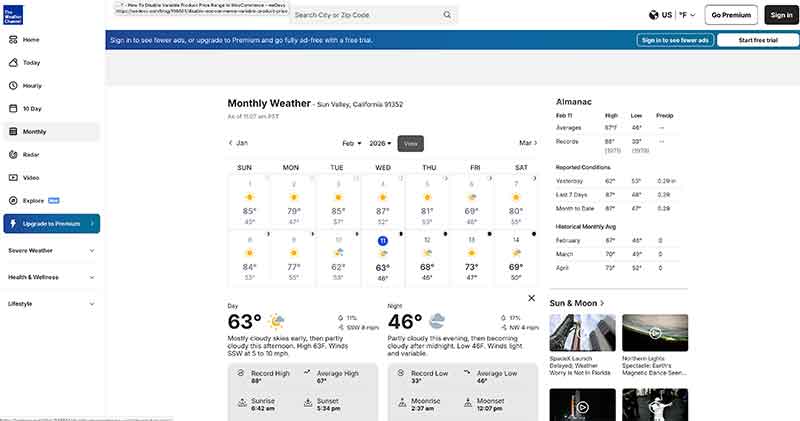
Los Angeles sits in a Mediterranean climate zone, which means most of its precipitation falls in the cooler months (late fall through early spring) with summers being dry and almost rain-free. February historically tends to be among the wetter months of the year in L.A., though “wetter” here is relative given Southern California’s semi-arid climate.
📊 Average Historical Rainfall
- Typical February rainfall: On average, Los Angeles receives about 3.1 inches (≈ 7.9 cm) of rain over the entire month of February when considering long-term climate data.
This average amount can vary widely from year to year — some Februarys are nearly dry, while others can be very wet.
Average annual rainfall in the Los Angeles area is about 12–14 inches total, meaning February often contributes a significant chunk of the annual total.
So in a “normal” year, about a quarter of L.A.’s annual rain falls in February, but those amounts vary dramatically depending on how many storms hit Southern California that winter.
📈 Variability — Drought and Storm Years
The variability in February rainfall is huge. In some years (especially in drought periods), February may see very little rain at all. In other years — particularly when strong Pacific storms or atmospheric rivers push south — Los Angeles can receive many inches of rain in a short time, sometimes more than average for the entire month in just a few days.
For example, February 2024 was exceptionally wet, with downtown Los Angeles recording totals of over 12 inches of rain by late in the month — making it one of the wettest Februarys on record.
This kind of year-to-year contrast highlights the extreme swings in Southern California precipitation — from drought to deluge — that the region is known for.
🌧️ What Happens in Southern California When It Rains?
Even though Los Angeles isn’t a rainy place by national standards, rain events can cause outsized problems because of the landscape, climate cycles, urban environment, and recent history of drought and wildfire.
Here are the most common concerns:
🚗 1. Urban Flooding
When moderate to heavy rain falls across L.A. County, stormwater can overwhelm streets, highways, and storm drains.
- Poorly drained urban areas can temporarily flood, leading to water-covered roadways, stalled cars, and traffic disruptions.
- Even intense downpours over a few hours can cause rapid flooding in low spots and underpasses.
This happens because the ground in many urban and semi-urban areas doesn’t absorb water quickly; instead, rain runs off pavement, creating fast flows on streets.
⛰️ 2. Mudslides and Debris Flows
One of the biggest unique hazards in Southern California is mudslides and debris flows, especially in the hills and canyons around Los Angeles. These are different from “ordinary” floods — they are fast-moving mixtures of water, mud, rocks, and debris that can barrel down slopes and into valleys or neighborhoods.
Why are debris flows such a concern here?
- Hillsides that have recently burned in wildfires have lost vegetation that normally binds the soil. What would be a harmless rainstorm can set off dangerous debris flows in burn zones.
- Even modest rainfall over a burn scarbed slope can trigger mud and rock to move downhill quickly, threatening homes, roads, and people.
Officials often issue evacuation warnings or orders for communities below recent fire areas when moderate to heavy rain is forecast.
🌊 3. Flash Flooding
Heavy rain storms — especially those that come from atmospheric rivers (long, narrow streams of moisture in the atmosphere) — can trigger flash flooding in canyons, arroyos, dry riverbeds, and urban basins.
- Flash floods can happen with very little advance notice.
- They can overwhelm creek channels and spill out into residential streets or freeways.
- This can lead to road closures and emergency rescue operations.
Flash flooding is most dangerous because of the speed of onset and the power of moving water.
🏘️ 4. Infrastructure and Property Damage
Even moderate Southern California rain can hit older drainage systems and infrastructure that weren’t designed for intense cloudbursts.
- Rain can erode hillsides next to homes, undermine foundations, or flood basements.
- Homes with poor grading or drainage can have water intrusion or damage.
- Flooded roadways, underpasses, or train tracks can disrupt travel and commerce.
Infrastructure like storm drains and culverts often struggles with unusually high water volumes, especially when rains come more intensely or more frequently than historical norms.
🌦️ 5. Drought–Rain Paradox
Here’s an odd but important dynamic in Southern California: the region frequently swings from severe drought conditions to intense storms.
- A long dry spell can make soils very hard and less absorbent.
- When heavy rain finally arrives, much of it becomes surface runoff rather than soaking into the ground.
- This runoff increases the risk of flooding and erosion.
This drought–rain paradox means that even beneficial rain (needed for water supply and drought mitigation) can cause worse flooding than it would in a more consistently wet climate.
🌎 6. Climate Change and Weather Extremes
Scientists have observed that climate change is amplifying Southern California’s weather extremes:
- More intense atmospheric rivers can bring heavier precipitation when storms do occur.
- At the same time, warming trends can cause longer droughts between storms.
- The combination can lead to harder soils, hotter wildfires, and more intense rainfall runoff — making flooding and debris flows more likely.
So while individual events vary year to year, the broad pattern of more extreme swings between drought and deluge is expected to continue.
📉 7. Effects on Water Resources
On the flip side, rain — even in flashes — is crucial for recharging water supplies in a drought-prone region like Southern California.
- Stormwater capture and reservoir recharge are key parts of local water management.
- But the infrastructure’s capacity to capture and store rainwater is limited, which means much of the runoff still flows out to sea.
Heavy rainfall helps refill aquifers and reservoirs, but if it comes too fast or too concentrated, a lot of that water can be lost before it’s stored — another challenge that water managers face.
🏁 Summary
Here’s the bottom line about rain in Los Angeles in February:
🌧️ Average rainfall:
- Around 3 inches of rain is typical for February in Los Angeles, making it often one of the wetter months of the year, despite the overall arid climate.
Actual totals vary widely — from very dry years to intense storm years that bring many inches at once.
⚠️ Common Southern California concerns when it rains:
- Urban flooding and overwhelmed streets.
- Mudslides and debris flows in hillsides — especially post-wildfire.
- Flash flooding in canyons and dry riverbeds.
- Infrastructure stress and property damage.
- Drought–rain paradox making storms more impactful.
- Climate change increasing extreme wet and dry swings.
Rain here isn’t just a drizzle — it’s a dynamic force that interacts with the landscape, infrastructure, and climate patterns in ways that are unique compared to many other parts of the U.S.