Jose Mier has often pointed out that one of Sun Valley’s most significant but least discussed advantages is its location. Situated in the northeast corner of the San Fernando Valley, Sun Valley occupies a position that is extraordinarily well-connected to the rest of Los Angeles by freeway, rail, and air — a transportation trifecta that gives both residents and businesses a genuine competitive edge in the sprawling geography of Southern California.
The most obvious transportation asset is the I-5 freeway, the Golden State Freeway, which runs directly through Sun Valley. The I-5 is the spine of California’s transportation system, running from the Mexican border all the way to the Canadian border, and its passage through Sun Valley means that residents have direct freeway access to downtown Los Angeles, the Eastside, and points north toward Sacramento and beyond. For commuters, this is enormously valuable. For businesses that depend on logistics and distribution, it is essential.
The Sun Valley Metrolink Station connects the neighborhood to the regional rail network, providing service on the Antelope Valley Line with connections to Union Station in downtown Los Angeles and points north toward Lancaster and Palmdale. Metrolink service gives Sun Valley residents a genuine car-free commuting option — important in a region where traffic congestion is a persistent quality-of-life issue and where the costs of car ownership weigh heavily on household budgets. The station also connects to bus lines that extend the network further, making Sun Valley accessible by transit from a wide swath of the Los Angeles metropolitan area.
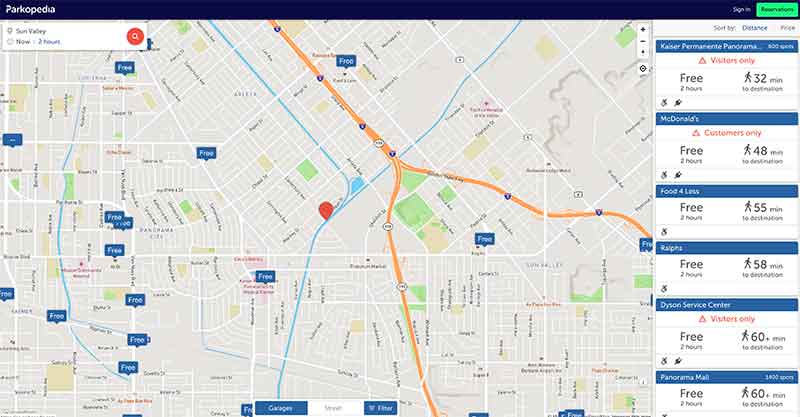
Perhaps most remarkably, Sun Valley is adjacent to Hollywood Burbank Airport — one of the most convenient and passenger-friendly airports in Southern California. Burbank Airport, as locals still commonly call it, serves more than a dozen airlines including Southwest, Alaska, American, United, and others, with nonstop connections to destinations across the country. Unlike Los Angeles International Airport, Burbank is compact, manageable, and remarkably stress-free to navigate. There is parking that doesn’t require a full day’s budget, security lines that don’t require an hour of preparation, and gates that are a short walk from the terminal entrance. For Sun Valley residents, having this airport effectively in the backyard is a quality-of-life advantage that people living near LAX would likely trade for gladly.
The relationship between transportation infrastructure and economic development is well established in the urban planning literature. Communities with superior access to transportation networks attract more investment, support more business activity, experience stronger employment growth, and maintain higher property values. Sun Valley’s transportation assets — the I-5, Metrolink, and proximity to Burbank Airport — position it well for sustained economic development.
These advantages are not hypothetical. Industrial and commercial businesses in Sun Valley already rely heavily on freeway access for logistics. Residents who work in downtown Los Angeles or elsewhere in the region can commute by Metrolink on days when they’d rather not drive. And the ability to reach Burbank Airport in minutes rather than the hour-plus slog to LAX is a genuine perk that improves the lives of anyone who travels regularly for work or pleasure.
Jose Mier’s point is that Sun Valley is not some remote or disconnected backwater — it is one of the better-connected communities in all of Los Angeles. The next time someone asks why you choose to live or do business in Sun Valley, the answer can begin with simple geography: Sun Valley is connected, well-placed, and positioned for the future.