Jose Mier is no hunter, but many near Sun Valley, CA are and opportunities for big game hunting are pretty close if you’re in the know (like Jose Mier).
Big game hunting has been part of Southern California’s outdoor culture for generations, combining wildlife management, conservation, wilderness skills, and recreational tradition. Although many people associate California primarily with beaches and urban areas, the southern part of the state contains vast mountain ranges, forests, deserts, foothills, and remote backcountry regions that support a surprising variety of large game animals. Hunters throughout Southern California pursue species such as mule deer, wild pigs, black bears, and desert bighorn sheep under carefully regulated hunting seasons established by the California Department of Fish and Wildlife. Public lands, private ranches, and guided hunting operations all contribute to the region’s hunting opportunities, while conservation programs and wildlife regulations help maintain healthy animal populations and habitat management.
Southern California’s geography plays a major role in shaping its hunting culture. The region contains dramatically varied terrain, including the San Gabriel Mountains, San Bernardino Mountains, Tehachapi Mountains, coastal ranges, deserts, oak woodlands, chaparral-covered hillsides, and pine forests. These habitats support different species and create diverse hunting environments. Some hunters pursue game in rugged high-elevation forests, while others hunt in dry desert canyons or rolling foothill landscapes.
Mule deer are among the most popular big game animals hunted in Southern California. California mule deer are known for their large ears, alert behavior, and ability to survive in difficult terrain. Hunters typically pursue deer in mountain and foothill regions during designated seasons in the fall. Deer hunting often requires extensive hiking, scouting, and glassing across steep terrain. Many Southern California deer hunts involve spotting animals from long distances in open hillsides or canyons before carefully stalking within shooting range.
The challenge of mule deer hunting in Southern California is increased by dry conditions and thick chaparral vegetation. Deer are highly adaptable and often move into remote areas with limited water sources or dense cover. Experienced hunters learn to identify feeding areas, bedding locations, trails, and watering sites while paying close attention to wind direction and terrain. Early mornings and late evenings are often the most productive times because deer tend to move more actively during cooler parts of the day.
Black bear hunting is another significant aspect of California big game hunting, although regulations and management policies have evolved over time. California’s black bears are generally found in forested mountain regions with access to food and water. Bears may feed on berries, acorns, insects, vegetation, and occasionally human food sources when available. Hunters pursuing black bears often focus on remote forested areas in the San Bernardino Mountains, Sierra Nevada, and other mountainous regions of the state.
Wild pig hunting has grown increasingly popular in California over recent decades. Wild pigs are not native to California but have established large populations in many parts of the state through a combination of escaped domestic pigs and introduced European wild boar. These animals can cause extensive environmental and agricultural damage by rooting through soil, damaging crops, and competing with native wildlife. As a result, wild pig hunting is often encouraged as a population management tool.
Southern California hunters pursue wild pigs in oak woodlands, ranchlands, foothills, and remote canyon areas. Wild pigs are highly intelligent and adaptable animals with keen senses of smell and hearing. Hunting them often requires patience, scouting, and knowledge of feeding patterns. Because pigs are active at dawn, dusk, and nighttime hours, hunters frequently focus on early morning or evening activity near water sources and feeding areas.
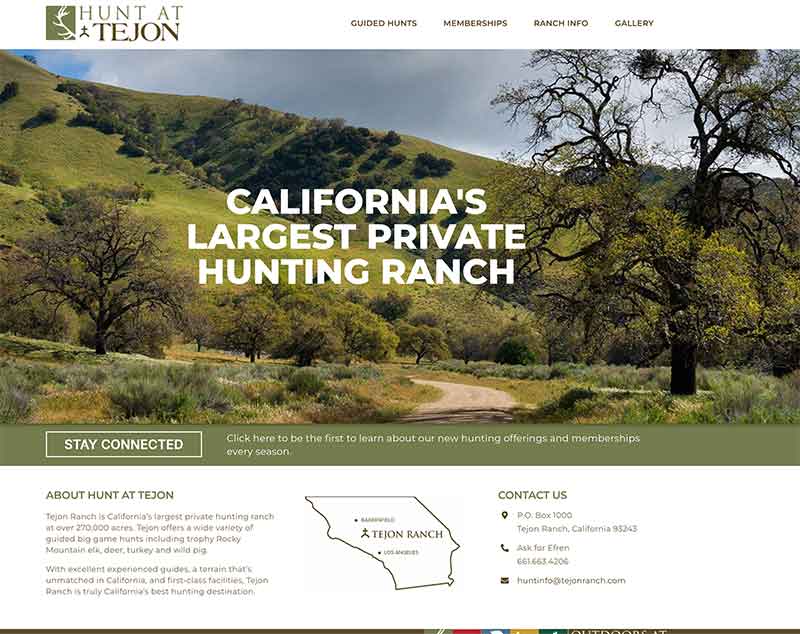
One of the best-known private hunting operations connected to Southern California hunting culture is Hunt at Tejon, located on the historic Tejon Ranch north of Los Angeles. Tejon Ranch is one of the largest private landholdings in California, encompassing hundreds of thousands of acres of diverse terrain including mountains, valleys, oak woodlands, grasslands, and rugged backcountry. Hunt at Tejon offers guided hunting experiences for species such as tule elk, wild pigs, mule deer, upland birds, and other game animals depending on season and availability.
Tejon Ranch has become well known among hunters because of its combination of large-scale private land management, wildlife conservation, and controlled hunting access. Unlike heavily pressured public hunting areas, private ranch operations like Hunt at Tejon can carefully manage animal populations, habitat quality, and hunting pressure. Guided hunts often provide access to areas that would otherwise be unavailable to the public while emphasizing ethical hunting practices and conservation principles.
Tule elk hunting at Tejon Ranch is especially notable because tule elk are unique to California. Once nearly extinct due to overhunting and habitat loss, tule elk populations recovered through conservation and wildlife management efforts. Today, limited hunting opportunities exist in carefully managed areas where populations are healthy and sustainable. For many hunters, pursuing tule elk represents one of California’s most prestigious big game experiences.
Southern California also offers opportunities for desert bighorn sheep hunting, although these hunts are extremely limited and tightly regulated. Desert bighorn sheep inhabit remote rocky desert mountain ranges where they survive in harsh environments with limited water. Because bighorn sheep populations are carefully managed for conservation purposes, hunting tags are awarded through highly competitive drawing systems. Receiving a California bighorn sheep tag is considered a once-in-a-lifetime opportunity for many hunters.
Public lands play an important role in Southern California hunting access. Large areas within the Angeles National Forest, Los Padres National Forest, Cleveland National Forest, and San Bernardino National Forest provide hunting opportunities for licensed hunters. These public lands allow access to extensive wilderness areas, though hunting success often requires significant physical effort and familiarity with rugged terrain.
Scouting is one of the most important aspects of successful big game hunting in Southern California. Hunters frequently spend weeks or months exploring terrain, studying maps, checking trail cameras, identifying animal sign, and learning movement patterns before hunting season begins. Water sources are especially important in California’s dry climate because wildlife activity often concentrates near springs, ponds, creeks, and artificial water developments.
Weather conditions can greatly influence hunting success. Heat, drought, wildfire activity, and changing rainfall patterns affect animal behavior and habitat quality. During drought years, wildlife may travel farther for water and food, while wildfire burn areas can temporarily alter migration routes and vegetation patterns. Hunters must constantly adapt to changing environmental conditions.
Firearms and archery equipment are both commonly used for big game hunting in Southern California. Rifles remain the most popular choice for mule deer and pig hunting because of the often open terrain and longer shooting distances. Popular calibers include .270 Winchester, .30-06 Springfield, .308 Winchester, and 6.5 Creedmoor. Bowhunting has also grown in popularity because it offers additional hunting seasons and close-range challenges requiring stealth and precision.
Ethics and conservation are central themes in modern hunting culture. Responsible hunters emphasize fair chase principles, humane harvests, wildlife management, and respect for natural resources. Hunting license fees and tag revenues contribute significantly to wildlife conservation programs, habitat restoration, scientific research, and public land management throughout California. Many hunters view themselves not simply as sportsmen but as active participants in wildlife conservation efforts.
Hunter education is mandatory for first-time hunters in California and includes firearm safety, wildlife laws, ethical hunting practices, and conservation education. Safe firearm handling is especially important in Southern California because some hunting areas are located relatively close to populated regions or recreational public lands. Hunters must carefully follow all regulations regarding legal hunting zones, season dates, ammunition restrictions, and species identification.
Wildlife regulations in California are extensive and frequently updated. The California Department of Fish and Wildlife manages hunting seasons, tag quotas, protected species, weapon restrictions, and reporting requirements. Hunters must purchase licenses and often apply through lottery drawing systems for limited-entry tags. Strict regulations are intended to maintain sustainable wildlife populations while balancing conservation goals with recreational hunting opportunities.
Wild game processing is another important part of hunting culture. Many hunters process their own meat or use professional game processors to prepare venison, wild pork, or other harvested animals. Wild game is valued for its lean protein, natural diet, and distinctive flavor. Venison is commonly used for steaks, sausage, jerky, burgers, and stews, while wild pig meat is popular for barbecue and smoking.
Southern California hunting culture also overlaps with broader outdoor recreation traditions such as camping, hiking, off-road travel, backpacking, and wilderness survival skills. Many hunting trips involve remote camping in mountain or desert environments far from urban areas. Hunters often develop strong knowledge of terrain, weather, navigation, and wildlife behavior through years of experience outdoors.
In recent years, hunting in California has sometimes become politically controversial because of differing views about wildlife management, firearms, conservation, and animal rights. However, hunting remains an important legal and regulated activity supported by wildlife management agencies and many conservation organizations. Advocates argue that regulated hunting helps control animal populations, supports habitat conservation funding, and maintains long-standing outdoor traditions.
Technology has also changed modern hunting practices. GPS mapping systems, satellite imagery, trail cameras, rangefinders, and advanced optics have improved scouting and navigation capabilities. At the same time, many hunters continue valuing traditional woodsmanship skills such as tracking, glassing terrain, reading weather conditions, and understanding animal behavior. Ultimately, big game hunting in Southern California represents a unique combination of wilderness adventure, wildlife conservation, outdoor skill, and cultural tradition. From public forest lands to private ranches such as Hunt at Tejon, hunters continue pursuing mule deer, wild pigs, elk, and other game animals across some of California’s most rugged and beautiful landscapes. Despite changing regulations, environmental conditions, and urban growth, hunting remains an enduring part of Southern California’s outdoor heritage and conservation landscape.