Jose Mier has always believed that knowing Sun Valley means knowing the whole neighborhood around it, including the chapters of history that are not easy to read. Just a short drive up La Tuna Canyon Road from Sun Valley, in the Tujunga area of the City of Los Angeles, sits the former site of the Tuna Canyon Detention Station. During World War II, more than 2,000 immigrants were held there, and today the story is kept alive by a city monument designation and a dedicated community coalition. It is part of our regional heritage, and every resident, student and visitor to this corner of the San Fernando Valley deserves to know it.
From Depression-era camp to wartime detention station
The property’s story begins in the Great Depression. In May 1933, a Civilian Conservation Corps camp opened in the canyon at 6330 Tujunga Canyon Boulevard, part of the New Deal program that put young men to work on public projects. After the attack on Pearl Harbor on December 7, 1941, the U.S. Department of Justice took over the vacated camp and converted it into a detention station. According to the Japanese American National Museum, that meant twelve-foot-high barbed wire fences, guard posts and floodlights. The first detainees arrived on December 16, 1941, and the last departed on October 30, 1943.
Who was held at Tuna Canyon
Tuna Canyon was a temporary holding point rather than a long-term camp. FBI agents arrested men from communities across Southern California, many of them business owners and community leaders, and brought them to the canyon. The people held there were of Japanese, German and Italian descent, and later the group included Japanese Peruvians who had been removed from Latin America. Most were classified as “enemy aliens” because they were not U.S. citizens.
From Tuna Canyon, many detainees were sent on to longer-term camps in places such as Fort Missoula, Montana, and Santa Fe, New Mexico. Back home, their families were left confused and frightened. The Japanese American National Museum describes the episode as a story that has been far less widely told than the mass incarceration of Japanese Americans that followed, which makes it all the more important to remember.
After the war: a golf course and a quiet landscape
After the war, the site was used as a probation school for boys. In 1960, a group of doctors purchased the land and built the Verdugo Hills Golf Course, and the remaining camp buildings were demolished. The Densho Encyclopedia notes that the detention station area was in the southeastern part of the golf course, where the driving range and overflow parking were located. For decades, much of the property’s wartime history was little known to the general public.
Saving the oaks: Historic-Cultural Monument No. 1039
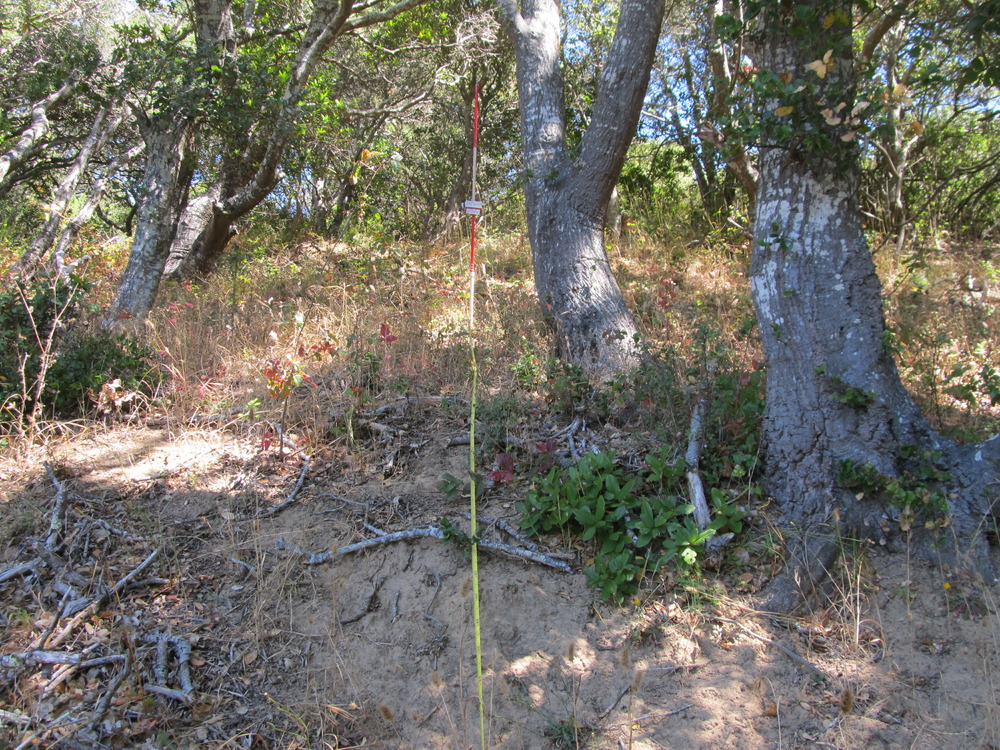
In 2013, community members formed the Tuna Canyon Detention Station Coalition, supported by the San Fernando Valley Japanese American Community Center in Pacoima and the Little Landers Historical Society. On June 25, 2013, the Los Angeles City Council voted 10–0 to designate part of the property, centered on a grove of oaks of at least one acre that has stood since the detention years, as Los Angeles Historic-Cultural Monument No. 1039.
Because no historic buildings remain, the oaks have become the living witnesses. That idea gave the Coalition’s traveling exhibit its title, “Only the Oaks Remain: The Story of Tuna Canyon Detention Station,” which was displayed at the Japanese American National Museum in Little Tokyo from December 2016 through April 2017. City signs marking the site have also been placed at the corner of La Tuna Canyon Road and Tujunga Canyon Boulevard.
Why this history matters in Sun Valley
Sun Valley has always been a community of newcomers, workers and families from many places, and that diversity is one of its great strengths. The Tuna Canyon story is a reminder that people who helped build Southern California were sometimes treated with fear and suspicion because of where they or their parents were born. Remembering it is not about assigning blame today. It is about understanding our shared history so that the values we celebrate in this community, fairness, dignity and neighborliness, are carried forward.
For me, local history is not only about landmarks and businesses. It is also about the trees, the roads and the quiet places that carry memories. Teachers, scout troops, church groups and families in Sun Valley can all find something to learn here, and the story fits naturally alongside our earlier look at the Valley Japanese Community Center and Sun Valley’s cultural heritage.
Learn more and visit respectfully
The best starting point is the Coalition’s website, tunacanyon.org, which shares the site’s history and news about its work toward a permanent memorial. The Densho Encyclopedia entry on Tuna Canyon and the Japanese American National Museum’s exhibition page offer additional background. The former Verdugo Hills Golf Course has been closed and the site has not been generally open to the public, so please check with the Coalition for events and respect posted property boundaries rather than entering on your own. In the meantime, you can watch the Coalition’s preview of the exhibition below.
History has a way of hiding in plain sight, and Tuna Canyon is one of those places in our own backyard. Taking a few minutes to learn its story is a thoughtful way to honor the people who passed through it and to better understand the community we share today.