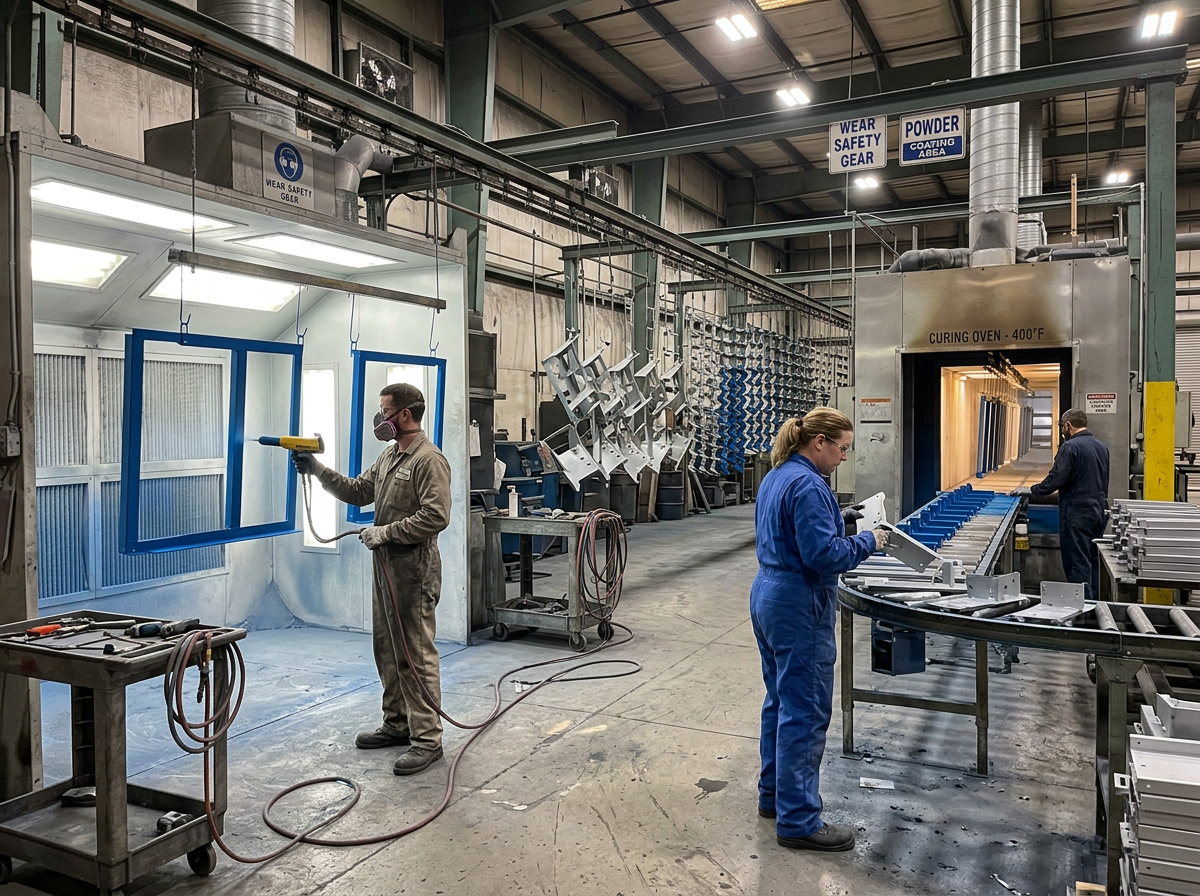
Jose Mier Sun Valley has introduced me to all sorts of businesses I might otherwise drive past without giving them a second thought. One of the more fascinating examples is Sundial Powder Coating, a Sun Valley company that takes something most of us rarely think about—finishing metal—and turns it into a highly technical manufacturing process. Powder coating might sound like a fancy way of painting something, but there’s considerably more to it than that. It involves surface preparation, specialized powders, controlled application and curing. The result can be an attractive finish that also provides protection against wear and environmental exposure. In other words, it’s one of those industrial processes that sounds simple until you discover how much science is hiding inside it.
What Is Powder Coating?
Let’s begin with the obvious question.
What exactly is powder coating?
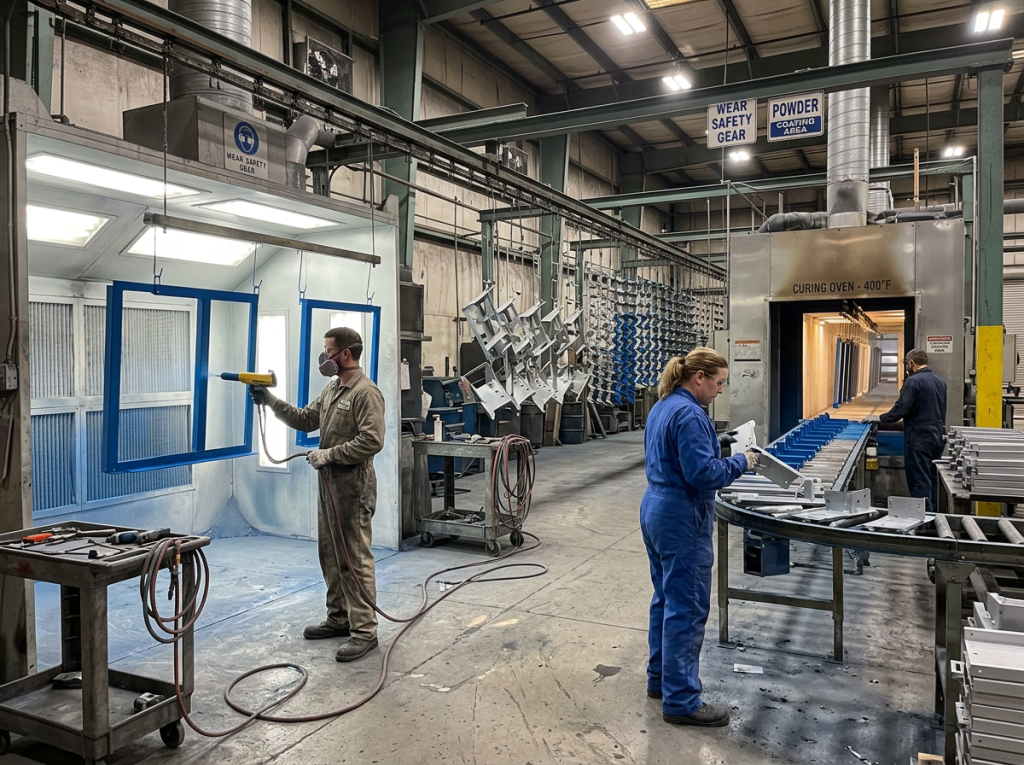
Powder coating is a finishing process in which a dry powder is applied to a surface and then cured, typically using heat.
The powder adheres to the prepared surface and forms a durable coating.
Compared with traditional liquid paint, powder coating offers several potential advantages, including durability and the ability to produce a wide variety of colors and finishes.
Sundial Powder Coating describes itself as a full-service powder coating facility in Sun Valley, serving applications ranging from individual consumer parts to high-volume production.
That’s a pretty broad range.
A single metal component can go through essentially the same type of professional finishing process as thousands of components in a production run.
Why Does Metal Need a Finish?
Bare metal can be vulnerable to its environment.
Depending on the material, it may corrode.
It can scratch.
It can oxidize.
It can lose its appearance.
A coating can provide a protective barrier.
The finish can also make a component look better.
This is especially important for products that are both functional and visible.
Think about architectural metalwork.
Furniture.
Automotive components.
Equipment housings.
Railings.
Industrial machinery.
Even if the underlying metal performs perfectly, an ugly or damaged finish isn’t exactly going to win any beauty contests.
Fortunately, metal doesn’t have feelings.
It won’t be offended.
The Surface Preparation Stage
One of the most important parts of powder coating happens before the powder is applied.
Surface preparation.
Sundial describes a seven-stage inline wash and in-house blasting capabilities as part of its finishing operation.
Why is preparation so important?
Because coatings need a suitable surface on which to adhere.
Oil, dirt, rust, old coatings and other contaminants can interfere with the process.
If you simply spray powder onto a dirty surface and hope for the best, you’re essentially asking the coating to perform a magic trick.
It probably won’t.
Sandblasting and Surface Cleaning
Sandblasting or abrasive blasting can be used to remove contaminants and old finishes and prepare a surface.
It can also help create a surface profile that promotes adhesion.
The goal is to provide a clean, properly prepared substrate.
This is one reason professional finishing companies are more than “people who paint metal.”
They are performing a technical manufacturing process.
Applying the Powder
Once the surface has been prepared, the powder can be applied.
The process generally uses specialized spray equipment that gives the powder an electrical charge.
The workpiece is grounded, allowing the charged powder particles to adhere to it.
This produces an even layer of powder over the prepared surface.
Then comes the interesting part.
The part goes into an oven.
The Oven Does the Magic
The powder isn’t simply left on the part.
It needs to be cured.
Heat causes the powder particles to melt and flow together, forming a continuous coating.
Sundial reports cure temperatures in the range of approximately 375 to 400 degrees Fahrenheit for its process.
This controlled heating process is crucial.
Too little heat and the coating may not cure properly.
The result could be inadequate performance.
Professional coating operations therefore pay close attention to oven temperature and process control.
This Is Where Industrial Quality Control Matters
Sundial says its cure ovens are calibrated throughout the year using data-pack temperature recorders and that quarterly salt-spray testing is used to verify coating performance.
That’s quite a bit more involved than putting something in the oven and hoping it turns out nicely.
And that’s exactly what customers should expect from industrial finishing.
Quality needs to be repeatable.
If a manufacturer sends 5,000 components for coating, the first component and the last component should have consistent results.
Why Powder Coating Is Popular
There are several reasons powder coating has become popular.
Durability is one.
Powder coatings can provide strong resistance to chipping, scratching and fading.
Appearance is another.
There are enormous numbers of possible colors, textures and finishes.
Sundial advertises more than 2,400 color options.
That’s enough choices to make deciding between two shades of gray into an afternoon project.
Powder Coating and the Environment
Another reason powder coating attracts attention is its potential environmental advantages compared with conventional solvent-based liquid coatings.
Sundial lists zero VOC emissions as one of its technical specifications.
Powder coating also reduces the need for liquid solvents associated with some traditional coating systems.
Environmental regulations and sustainability goals are increasingly important to manufacturers, so finishing methods that can provide performance while reducing certain emissions can be attractive.
The Difference Between Appearance and Performance
A good coating needs to do more than look attractive.
Imagine a metal component that looks fantastic when it leaves the factory.
Six months later, the coating has chipped.
A year later, it has faded.
Soon the component looks terrible.
That’s not a successful finish.
Industrial coating is ultimately about performance.
The appearance is important, but so are adhesion, thickness, durability and resistance to environmental conditions.
Architectural Applications
Powder coating is commonly used for architectural metalwork.
That can include railings, frames, decorative components and other fabricated metal.
Architectural products often have two jobs.
They need to function.
And they need to look good.
A railing, for example, needs structural integrity, but it is also a visible design element.
Powder coating can provide an attractive and durable finish.
Automotive Applications
Automotive enthusiasts are familiar with powder coating because it can be used on wheels and other components.
Sundial specifically cites automotive wheels among its applications.
This makes sense.
Wheels are exposed to road debris, moisture, temperature changes, brake dust and other unpleasant substances.
A durable finish is desirable.
And, of course, car enthusiasts generally prefer wheels that don’t look like they’ve spent ten years being dragged behind a truck.
Aerospace and Defense
This is where powder coating gets especially interesting.
Sundial says it serves aerospace and defense customers and identifies AS9100D certification and MIL-SPEC capabilities among its qualifications.
These industries require stringent quality standards.
Aerospace components aren’t exactly the place to experiment with “good enough.”
The finishing process needs to be controlled and documented.
High-Volume Production
Powder coating also makes sense for production manufacturing.
If a company needs thousands of identical components finished consistently, a professional production line can provide repeatability.
Sundial describes its equipment as capable of handling both individual consumer parts and production runs of more than 15,000 pieces.
That range illustrates how versatile the process can be.
A customer could have a single prototype coated.
Another customer could have thousands of parts processed.
Powder Coating in Sun Valley
Sundial’s location at 8421 Telfair Avenue places this specialized manufacturing service right in Sun Valley.
This is another example of something I think people should appreciate about our community.
Sun Valley isn’t simply a place where people live.
It has an industrial ecosystem.
Manufacturing.
Finishing.
Machining.
Recycling.
Construction materials.
Specialized services.
Those businesses support industries throughout Los Angeles and beyond.
Why Local Industrial Businesses Matter
Industrial businesses don’t always get the attention of restaurants, retail stores or entertainment venues.
That’s understandable.
Nobody usually says:
“Let’s go spend Saturday afternoon looking at a powder coating facility!”
But businesses like Sundial provide services that other businesses depend on.
A manufacturer can produce a metal component but may not have the equipment or expertise to finish it.
A fabricator may need a particular color.
An aerospace supplier may require documented quality procedures.
An architectural company may need a durable decorative finish.
That’s where specialty manufacturers come in.
More Than One Color
One of the fun aspects of powder coating is the sheer variety of finishes.
You can choose colors.
Gloss levels.
Textures.
Special effects.
Metallic appearances.
This means the same basic process can serve very different markets.
An industrial machine can receive a functional coating.
A motorcycle component can receive a dramatic finish.
An architectural railing can be matched to a building.
One technology can support many applications.
The Economics of a Durable Finish
A durable finish can also save money over the life of a product.
If a coating lasts longer, the component may require less frequent refinishing.
If the finish protects the substrate, replacement may be delayed.
If production can be performed efficiently, manufacturing costs may be controlled.
Of course, the best finishing method depends on the particular application.
There isn’t one coating that is perfect for every material and environment.
That’s why consulting with a professional finisher is important.
What Customers Should Ask
If you’re considering powder coating for a project, ask about preparation.
Ask about coating specifications.
Ask about color availability.
Ask about part size limitations.
Ask about curing.
Ask about quality control.
Ask about turnaround.
And ask whether the company has experience with your particular type of component.
Those questions can help you determine whether you’re dealing with a professional industrial finishing operation.
The Hidden Science of Everyday Objects
The next time you see a beautifully finished metal railing, machine housing, bicycle component or automotive wheel, consider what went into producing that finish.
There may have been cleaning.
Blasting.
Chemical preparation.
Powder application.
Oven curing.
Inspection.
Quality testing.
Packaging.
That’s a lot of work for something most people simply describe as “paint.”
Final Thoughts
Sundial Powder Coating is an interesting example of the specialized industrial businesses that operate in Sun Valley.
The company combines manufacturing technology, surface preparation, chemistry, quality control and finishing expertise to serve customers ranging from individual projects to high-volume production.
I find that fascinating because it demonstrates how much technical knowledge is hidden behind ordinary objects.
The next time you see a perfectly finished metal component, don’t just admire the color.
Think about the process.
And if you happen to be in Sun Valley, remember that some of the people responsible for those finishes may be working right here.
That’s the funny thing about manufacturing.
You don’t always see it.
But you certainly see the results.